Binding types
The binding type has a real influence on the way a book opens. We have put together a selection of the most important binding types.
Thread binding
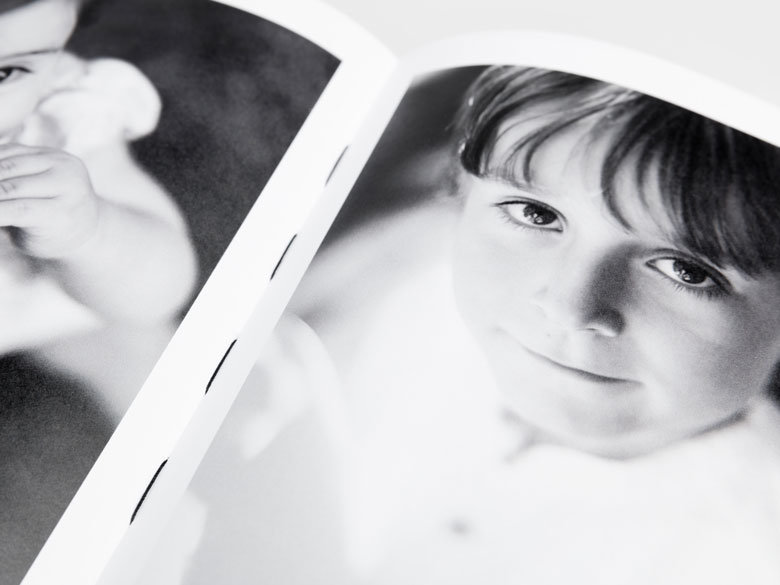
Thread binding is the best quality, longest-lasting binding type. The folded sheets of paper of a book are put together; each is opened in the middle and 'threaded' to the other layers in the whole volume along the fold.
Glue binding
With glue binding, the text block is milled and the paper fibers exposed before being glued with paste. Glue binding offers considerable benefits for books featuring different types of paper and a high page count, as well as for large print runs and low-cost brochures.
Flatbook
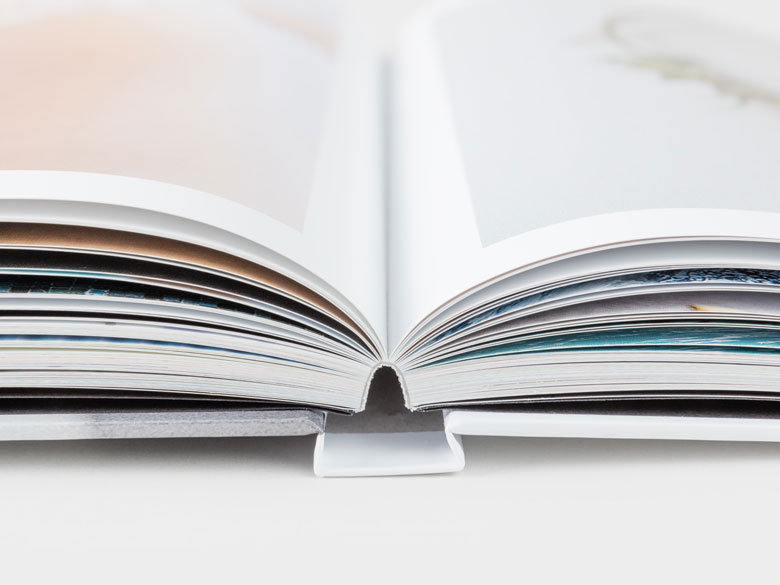
In a flat book, the sheets of paper are glued to one another across the whole surface to form the pages of the book. This produces a book block that can open completely flat and consistent double pages with no break: it is traditionally used for the production of children's books and menus, but has been reinvented by Bubu to meet the modern requirements.
Flatorello
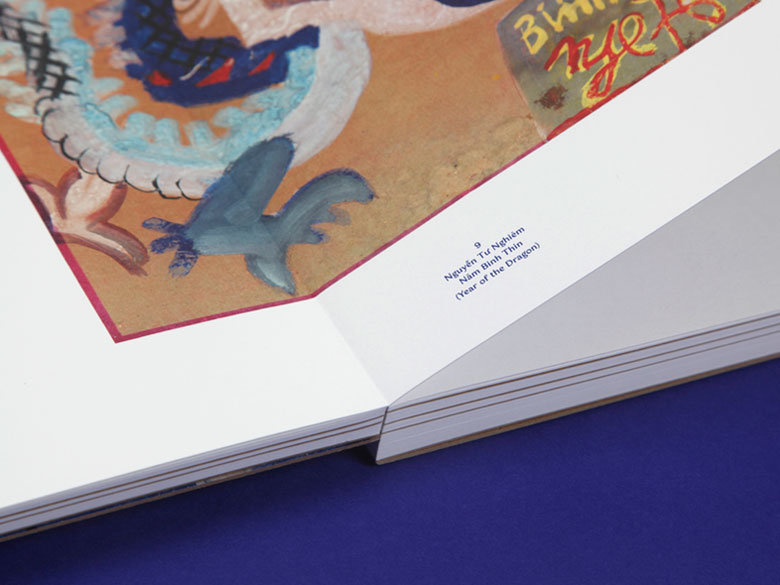
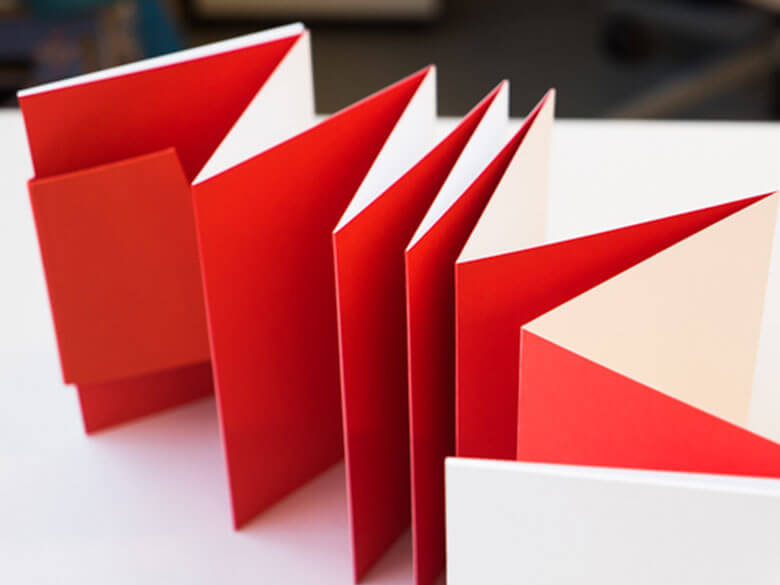
Flatorello is a combination of flat binding and the leporello method. As in the flat-binding method, the sheets are bound together flush across the full surface. However, the sheet segments on four sides are each turned by 180 degrees. The length of the Flatorello can be extended as desired.
Wire-O binding
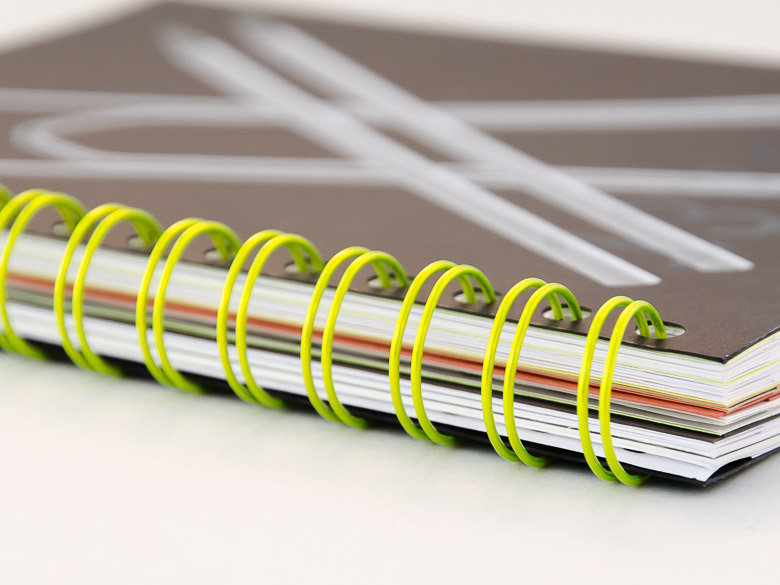
Wire-O is a brand which is used as a slang term for wire binding. The wire is inserted into holes punched into the stack of paper and sealed. Wire-O bindings can be opened around 360 degrees. This binding is particularly good for different materials and changing formats. Design elements include the colour of the wire and the shape of the perforations.
Spiral binding
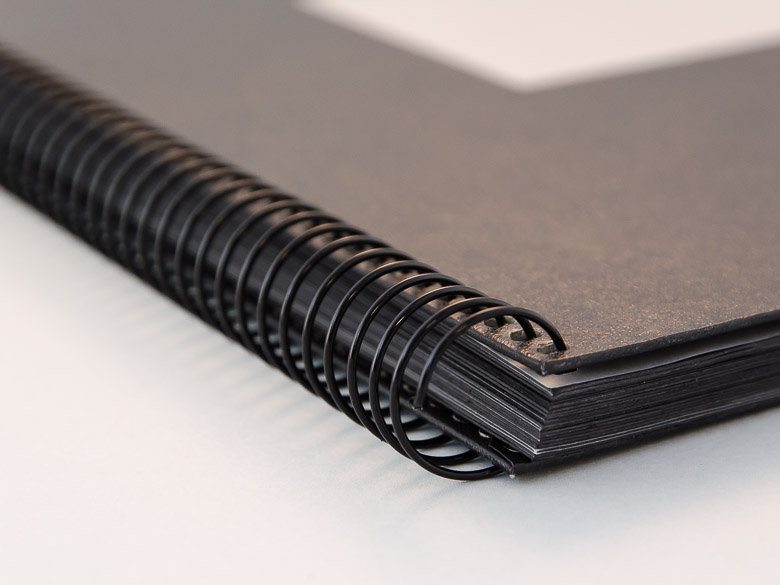
Spiral binding is similar to Wire-O binding. In this case, spiral made of metal or plastic is "screwed in" to the holes punched into the stack of paper. Spiral binding is more stable than Wire-O binding - pages cannot fall out, but opposite pages can shift slightly. Using thin wire can make spiral bindings a very elegant option.
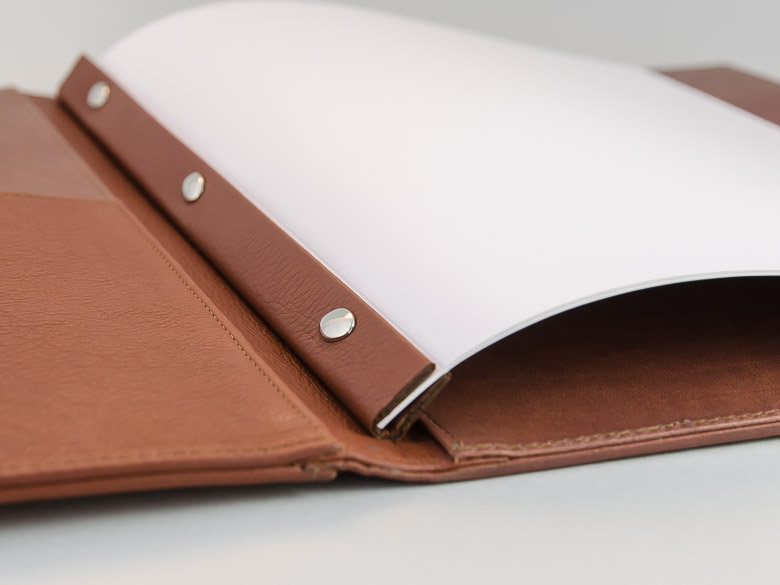
Book screws
Book screws connect loose sheets with punched holes. The screws can be visible in a brochure or concealed under a ribbed cover. The benefit of this method is that the binding can be undone to allow pages to be exchanged at a later date. However, the poor opening is a disadvantage.